
poster di SOLE
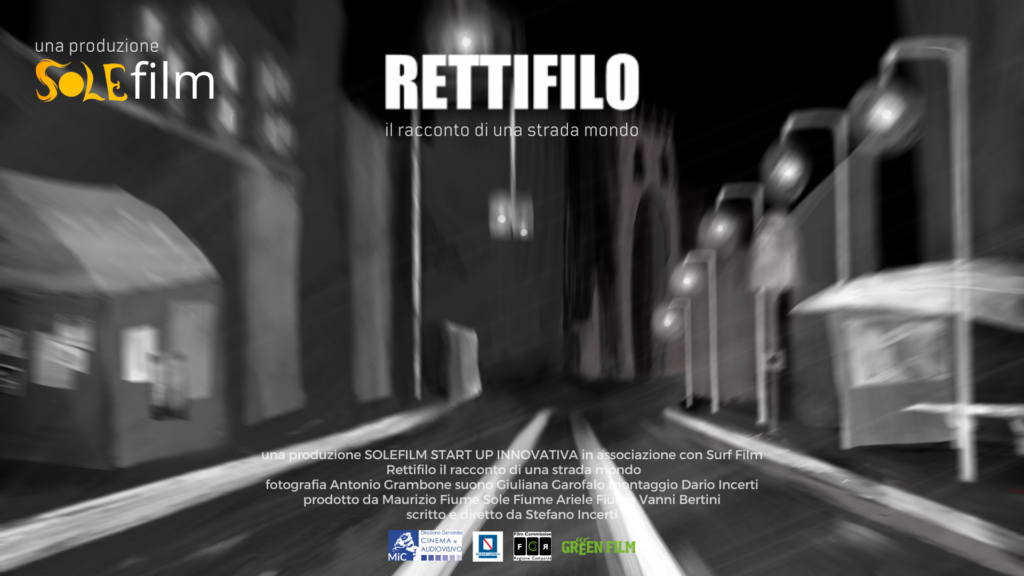
LOGLINE
One street, one day, a thousand lives.
A symphonic portrait of Naples’ Rettifilo, a boulevard built to erase the city’s past, now the teeming, contradictory artery of its present.
You never see the sea in this film.
Not out of snobbery, nor for the sake of originality at all costs, but because it is far too easy to trade in stereotypes, to summon that “Neapolitan spirit” which, the moment it enters a work, overwhelms everything and everyone, demanding to be magnified.
Rettifilo portrays the microcosm of a street. It happens to be a Neapolitan street, the one where I have lived for more than thirty years, but it is also a street that has never bowed to the current tourist invasion, keeping a polite distance from those who would impose an amusement-park brand of hospitality. The people who live here are too busy working, studying, producing: there is little room for pizza and mandolins, for folk songs, for street urchins diving into the sea or mermaids more or less washed up on the shore.
The street is a microcosm of the city’s contradictions: a vibrant and strange city, elusive and fascinating, studded with money and overflowing with misery, a place of opposites.
Rettifilo is not a sociological analysis, nor does it carry the elegiac, triumphalist flavour of those who mourn a Naples that no longer exists.
- Director Stefano Incerti
- Producer Maurizio Fiume Sole Fiume Ariele Fiume Vanni Bertini
- Cinematographer Antonio Grambone
- Sound Giuliana Garofalo
- Editor Dario Incerti
https://filmfreeway.com/projects/4376659
SHORT SYNOPSIS
At dawn, the florists and fishmongers of Corso Umberto I, the Rettifilo, raise their shutters, and a single day begins on the boulevard that cuts through the ancient heart of Naples.
Carved out of the old city after cholera, in the name of modernity, the street built to erase Naples has become the place where Naples is most alive.
From a university lecture hall to a mosque, from Scarlatti’s manuscripts to the night shift of the street cleaners, Rettifilo moves from first light to deep night, composing the symphony of a street that is a world.
SYNOPSIS
At first light, the florists and fishmongers of Corso Umberto I, the street every Neapolitan calls the Rettifilo, “the straight line”, raise their shutters, while cleaners move through the empty halls of the university. So begins a single day on the boulevard that cuts, arrow-straight, through the ancient heart of Naples.
In a lecture hall above the street, architecture historian Elena Manzo tells her students how it came to be. Inaugurated in 1894, the Rettifilo was carved through the city’s dense medieval fabric in the wake of a devastating cholera epidemic: entire neighbourhoods gutted, churches and palaces of great artistic value demolished, all in the name of light, air and modernity. As she speaks, a student march passes beneath the windows, its drums and chants closer to a street party than a protest.
The city, as ever, refuses to be quiet.
The film moves with the light.
In the State Archive, two curators prepare an exhibition of Alessandro Scarlatti’s autograph manuscripts.
A few doors away, in the mosque, Omar recites the morning prayer, its echo reaching the Caritas centre, where volunteers are serving breakfast to those who have nowhere else to go.
Silvia, a clarinettist with the Scarlatti Orchestra, waits tables in a hotel to make ends meet. Lesya, a young Ukrainian photographer, shoots events to pay her way through university.
When darkness falls, Luca, Gennaro and Antonio begin the night shift, sweeping clean a street that never quite sleeps, while at the boulevard’s edge, workers and volunteers hand out hot meals to the homeless and to migrants without shelter from the cold.
A street built to erase a city has become the place where that city is most itself: layered, hospitable, precarious, defiantly alive.
Without narration, moving from dawn to deep night through the interwoven lives of those who work, study, pray, perform and survive along its length, Rettifilo is the portrait of a street that is a world, and of a metropolis that keeps rebuilding itself, every single day, on top of everything it was once meant to forget.